Straight Talk Quantum

Short, vertical videos with straight answers to common quantum questions. Fast, clear, and to the point - each episode tackles one topic in just a few minutes.

Ideal for a quick dive into real challenges and opportunities in quantum computing.

Straight Talk Quantum Episodes

Filter by tag
QAOA Today: How Far Can NISQ Hardware Really Go? (as of April 2026)
STQ#4
Released 10 Apr 2026

QAOA Today: How Far Can NISQ Hardware Really Go? (as of April 2026)

Open on YouTube

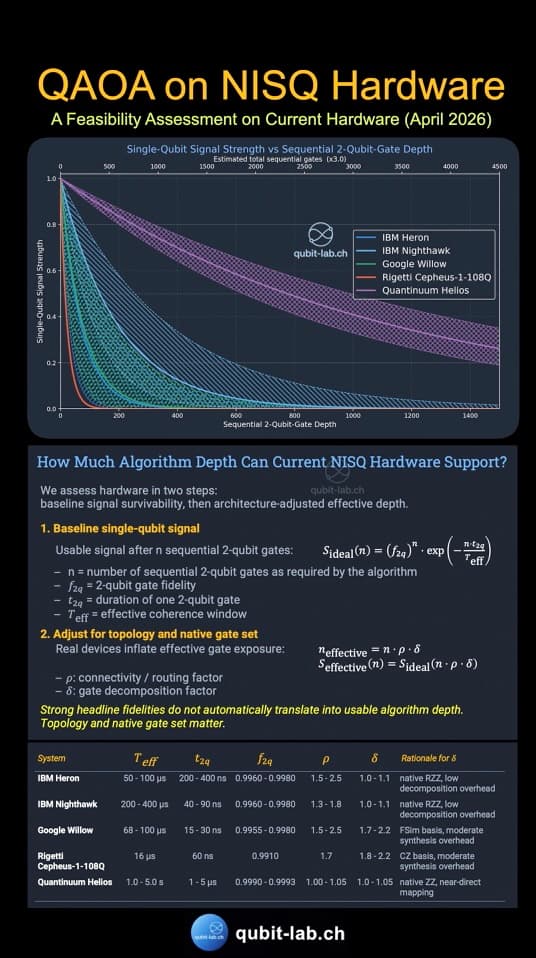
QAOA is often presented as a promising approach for tackling complex optimization problems. But its real value depends on what today’s hardware can actually support. Current NISQ devices come with strict limitations: noise, limited connectivity, and shallow circuit depths. These are not minor details, they fundamentally shape what QAOA can and cannot achieve in practice. This video takes a grounded look at these constraints and translates them into realistic expectations. Not as a final verdict, but as a clearer picture of where we stand today and what remains out of reach.

QAOA Search in Action
STQ#3
Released 02 Apr 2026

QAOA Search in Action

Open on YouTube

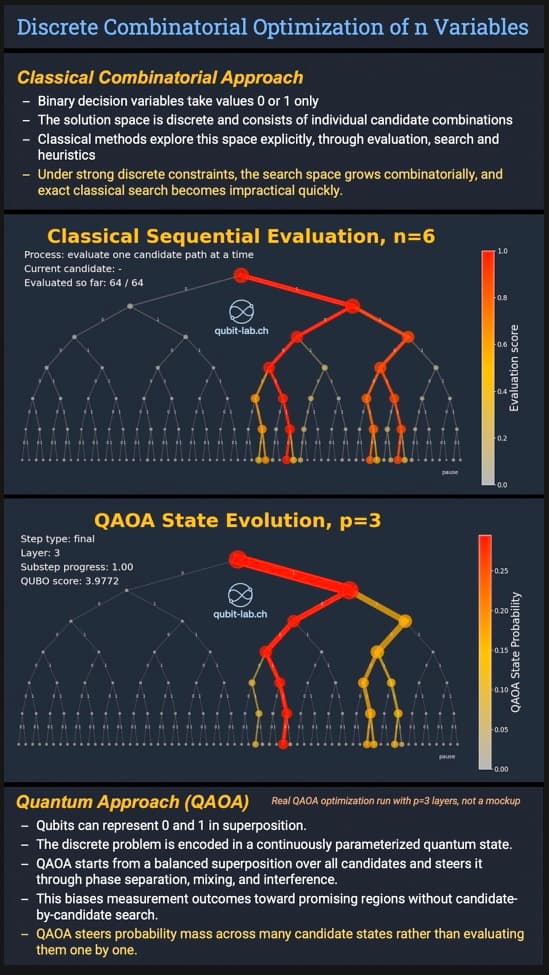
This short visually compares a classical sequential search with quantum optimization using QAOA. (see the full video in the finance section)

What is a Qubit?
STQ#2
Released 04 Oct 2025

What is a Qubit?

Open on YouTube

A qubit is much more than an “extended classical bit. It is the core carrier of quantum behavior - superposition, phase, interference. And in QML, a single qubit can encode a full parameter, making it a powerful resource. Some say you don’t need to understand qubits, just like coders don’t care about voltages in classical chips. I disagree. To truly grasp quantum code, you need at least the general picture of what a qubit really is. This video aims to give you that - not comprehensive, but enough to spark real understanding and curiosity.

Start Now or Wait 10 Years?
STQ#1
Released 28 Sept 2025

Start Now or Wait 10 Years?

Open on YouTube

Should we wait until quantum hardware matures - or already start today with hybrid algorithms? A straight talk on opportunities and risks.